1. Centre de Lutte Contre Le Cancer Leon Berard (France)
2. Cosylab (Slovenia)
3. Deutsches Krebsforschungszentrum Heidelberg (Germany)
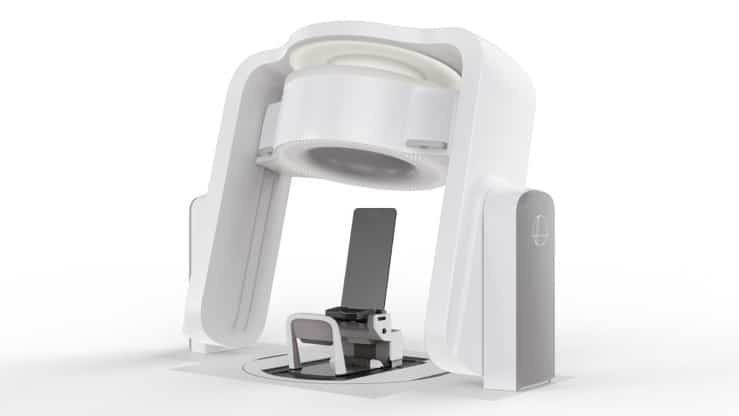
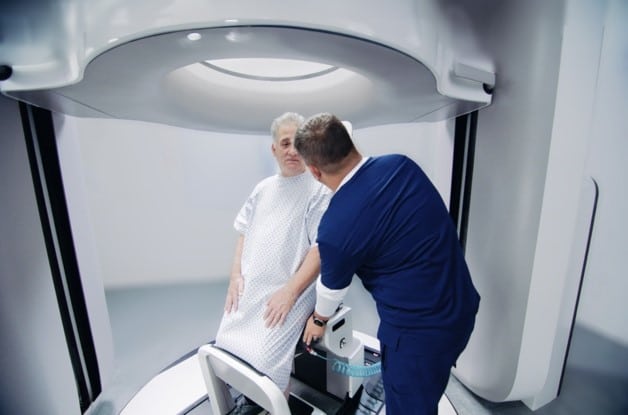
Delivering radiotherapy to patients positioned upright, rather than lying supine, represents a significant paradigm shift that could reduce treatment costs and improve clinical outcomes for certain patients. Many individuals struggle to tolerate, or feel uncomfortable, in supine radiotherapy positions: transitioning to upright body positioning presents a valuable opportunity to enhance patient comfort and make treatments more patient-centred.
In this interdisciplinary project, the successful candidate will use ergonomics and human factors investigations to enhance upright positioning and treatment workflows for radiotherapy. The project will evaluate the comfort of new immobilization devices for upright radiotherapy, for example arm supports. Additionally, treatment devices will be assessed according to the principles of inclusive design, to determine whether they are accessible and usable for a wide range of patients and clinical staff. Using human factors frameworks, treatment workflows will be evaluated to consider any possible “pinch-points” or safety issues.
This project will be co-supervised by Leo Cancer Care, an innovative company founded in 2016 that specializes in medical devices for upright radiotherapy. The company is developing upright patient positioning systems, imaging scanners, and treatment delivery systems. (Leo Cancer Care’s technology is not yet available for clinical use). Leo Cancer Care has offices in Crawley, near London (UK) and Middleton, Wisconsin (USA).
Human factors studies are now a crucial aspect of medical device regulation, and pursuing a PhD in this area will equip the candidate with skills that are highly sought-after within the medical device industry.
Goal:
To consider ergonomics and human factors, as applied to the management of comfortable, accurate and repeatable patient positioning for upright radiotherapy. To help develop immobilisation solutions that accommodate a diverse range of needs and preferences (for both patients and clinical staff), promoting equality and usability for everyone.
Tasks:

My name is Nicole Caballero Canchanya, and I am originally from Peru. I recently completed my Master’s in Biosciences and Bioengineering Innovations for Precision Medicine, an Erasmus Mundus joint degree delivered by Université Grenoble Alpes, the University of Barcelona, and the University of Naples Federico II. Prior to that, I obtained a Bachelor’s degree in Biomedical Engineering from the National University of San Marcos in Peru. My academic background sits at the intersection of engineering, healthcare, and innovation, with a strong focus on translating research into real clinical impact under interdisciplinary supervision.
I am currently hosted by Loughborough University in the United Kingdom, in collaboration with Leo Cancer Care, where I am supervised by Michael Fray and Tracy Underwood. I will be working on the UPLIFT project 18 titled “Human factors and ergonomics to evaluate and improve patient positioning for upright radiotherapy.” I chose this topic because I am deeply interested in how engineering and human factors can enhance patient experience while improving treatment effectiveness of medical technologies. Upright radiotherapy represents a promising shift toward more patient-centred cancer care, and I am motivated to help ensure that these emerging technologies are comfortable, inclusive, and ready for clinical translation. Through this project, I aim to apply ergonomics and human factors methodologies to assess comfort, usability, and accessibility, contributing to safer and more effective solutions for both patients and clinicians.
Beyond my academic work, I enjoy travelling, volunteering, and playing table tennis. My personal motivation is strongly tied to clinical translation, bridging the gap between laboratory innovation and real-world healthcare. Cancer care holds a profound personal meaning for me, which has reinforced my commitment to developing medical technologies that are more accessible, humane, and patient-centred.