Project 13: Antropomorphic phantoms for upright treatment validation

Enrollment: Ruprecht-Karls-Universitaet Heidelberg

Host institution: Deutsches Krebsforschungszentrum Heidelberg
Planned secondments

1. Czech Technical University (Prague)
2. Helmholtz-Zentrum Dresden-Rossendorf (Germany)
3. Loughborough University, Leo Cancer Care (UK)

Supervisor
Co-Supervisor
Oliver Jäkel
Share This

Project description

We are offering an exciting research task for a PhD thesis in the above-mentioned subject areas in the medical physics department in radiotherapy physics. As part of this work, a dynamic anthropomorphic abdomen phantom is to be developed that has the ability to simulate patient-equivalent properties for upright patient postures, including 4D CT and MRI imaging with which breathing movements can be displayed. Radiation planning is to be created for a target volume and dosimetric evaluation is to be carried out using the measurement techniques integrated in the model. 


Tasks: 

  • Design of an abdomen phantom using CAD software Inventor and design software Geomagic Freeform. 
  • Implementation of the concept in a real model. 
  • Testing of reproducible breath-induced movement sequences that the phantom is supposed to depict using CT and MRI imaging 
  • Planning, measuring and analyzing the dose distribution on the phantom according to the treatment plan. 
  • Documentation of the development steps that enables certification of the final product for commercialization. 


What we offer: 

  • The medical technology working group has 10 years of experience in the development of anthropomorphic phantoms and has extensive technology for manufacturing, such as industrial 3D printers with different printing processes and direct access to the precision mechanics workshop of the DKFZ. 
  • Support from experienced supervisors and a large team working in this research area 
  • An innovative environment that combines practical applications in medical physics with the latest technology. 
  • All technologies required for this project to carry out the therapy chain, from imaging, radiation planning and dosimetry, are available in the immediate vicinity.
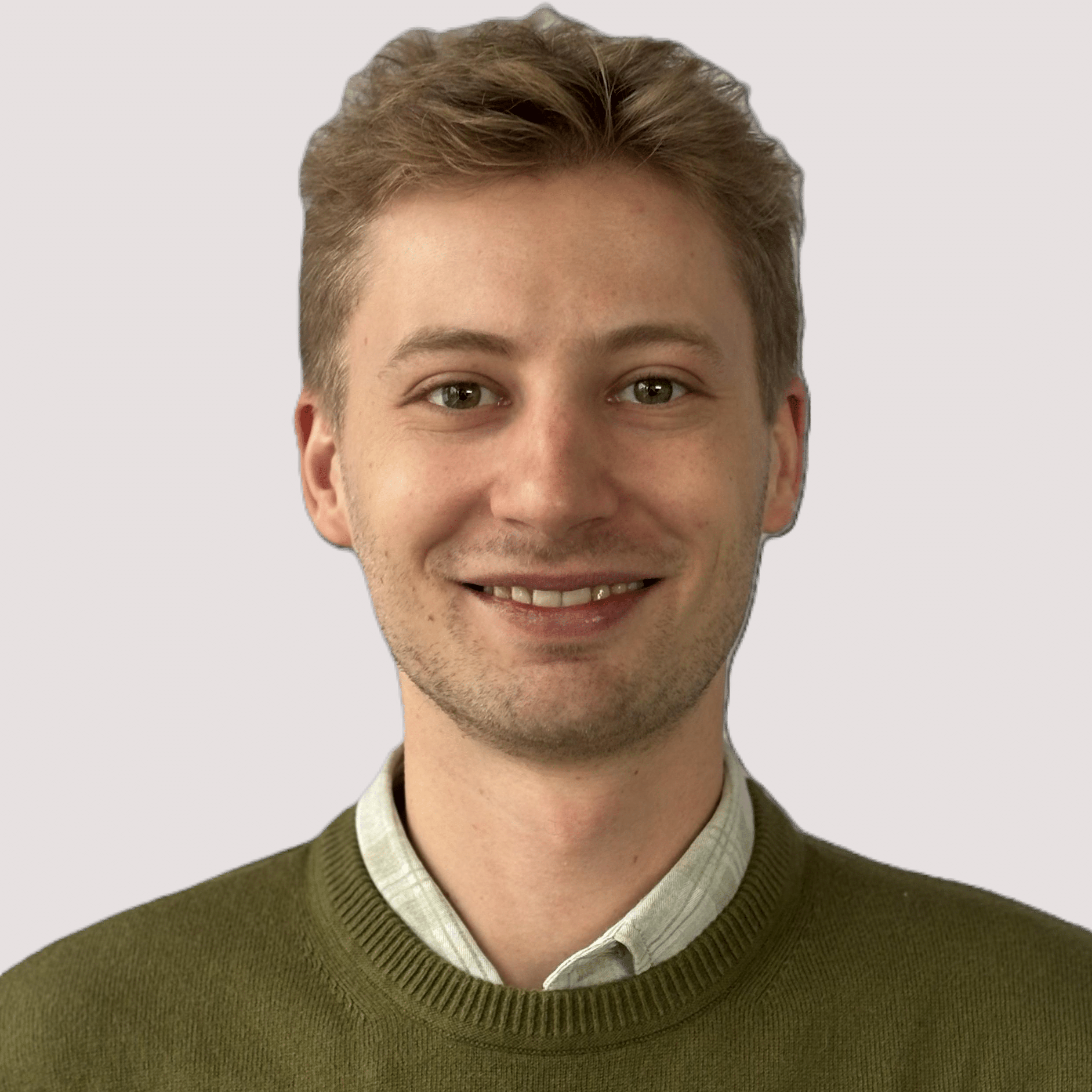
ProfilePic_PitArend_BG(1)

Pit Arend

Deutsches Krebsforschungszentrum Heidelberg

My name is Pit Arend, and I am from Luxembourg. I hold a Bachelor’s degree in Mechanical Engineering and a Master’s degree in Biomedical Engineering, which provide me with a solid academic background at the intersection of engineering and medical applications. Throughout my studies, I particularly enjoyed working on practical projects where ideas could be transformed into real, functional solutions with a tangible impact.

I am currently hosted by the German Cancer Research Center (DKFZ) in Heidelberg, where my work is supervised by Armin Runz and Prof. Oliver Jäkel. I am working on the project entitled “Development of an Anthropomorphic Phantom.” My role is to design and build a human-like dummy (i.e. the phantom), that can be used for quality assurance in upright radiotherapy. Through this project, I aim to create a robust and practical tool that supports experimental validation and workflow testing. My expectation is that the phantom will be useful not only for my own work, but also for many of my fellow UPLIFT PhD students, and that it will contribute to the further advancement of upright radiotherapy.

I chose this project because it is a truly interdisciplinary challenge, combining mechanical engineering, medical physics, electronics, and pneumatics, and making use of advanced manufacturing techniques such as state-of-the-art 3D printing, all of which strongly match my interests. I enjoy hands-on work and building things, especially when they serve a clear purpose, and I am especially motivated by working on a big-picture project that goes beyond individual tasks, encourages constant communication, and involves traveling to collaborate closely with different teams and partners. Outside of work, I enjoy playing basketball and tinkering with vintage motorbikes and hobby electronics, reflecting my enthusiasm for engineering, experimentation, and continuous learning.

Pit Arend | LinkedIn

Deutsches Krebsforschungszentrum Heidelberg

DKFZ is the largest biomedical research institute in Germany and a member of the Helmholtz Association of National Research Centers. In more than 100 divisions and research groups, our more than 3,000 employees, of which more than 1,200 are scientists, are investigating the mechanisms of cancer, are identifying cancer risk factors and are trying to find strategies to prevent people from getting cancer. They are developing novel approaches to make tumor diagnosis more precise and treatment of cancer patients more successful.