1. RaySearch (Sweden)
2. GSI Helmholtzzentrum für Schwerionenforschung (Germany)
3. Helmholtz-Zentrum Dresden-Rossendorf (Germany)
The recently established (2022) Center for Theranostics (CfT) is the flagship project of the Jagiellonian University in Kraków (JUK) dedicated to interdisciplinary research in the field of nuclear medicine. The center is a home to a globally unique project aiming at a construction of a multi-photon total-body positron emission tomography scanner consisting of plastic scintillators: TB-J-PET (Total-Body Jagiellonian PET). CfT conducts pioneering research in positronium and quantum entanglement imaging. The first ever positronium images of the human brain were recently demonstrated using the TB-J-PET prototype.
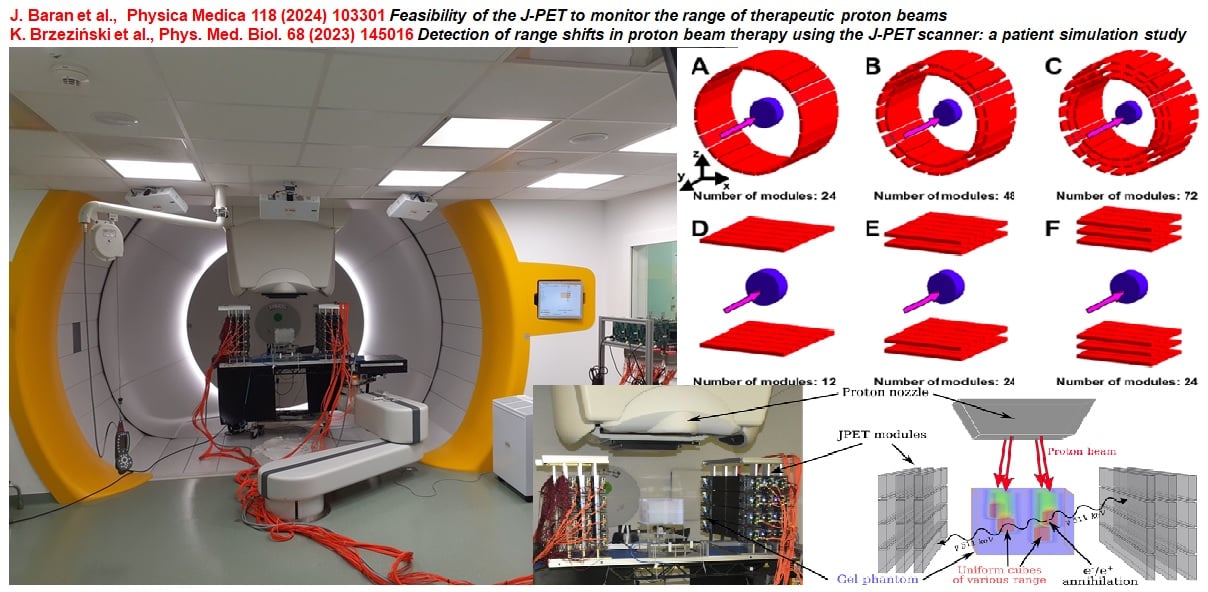
The J-PET international research group consists of approximately 50 scientists from 12 countries, including nuclear and medical physicists, biophysicists, also computer scientists, molecular biologists and nuclear chemists. The research conducted in two subgroups covers biomedical and medical engineering. The majority of our group are PhD students and early-stage researchers (ESRs), with 15 PhD theses currently in preparation. Our group is currently implementing 17 projects financed by the National Science Center, the Ministry of Science in Poland and Swiss National Science Fundation (SNSF). Center for Theranostics cooperates with the Cyclotron Center in Bronowice, the only hadron therapy center in Poland, in developing proton beam range monitoring using a modular J-PET scanner during patient therapy.
The PhD student will be admitted to study Physics or Biophysics education program in the Doctoral School of Exact and Natural Sciences at the Faculty of Physics, Astronomy and Applied Computer Science in English as a language of education. We also offer our PhD students unique courses in Medical Physics and Theranostics as well.
Project description
Goal
A cost-effective, modular perioperative detector for dose monitoring during hadron therapy in patients in the upright position.
Tasks


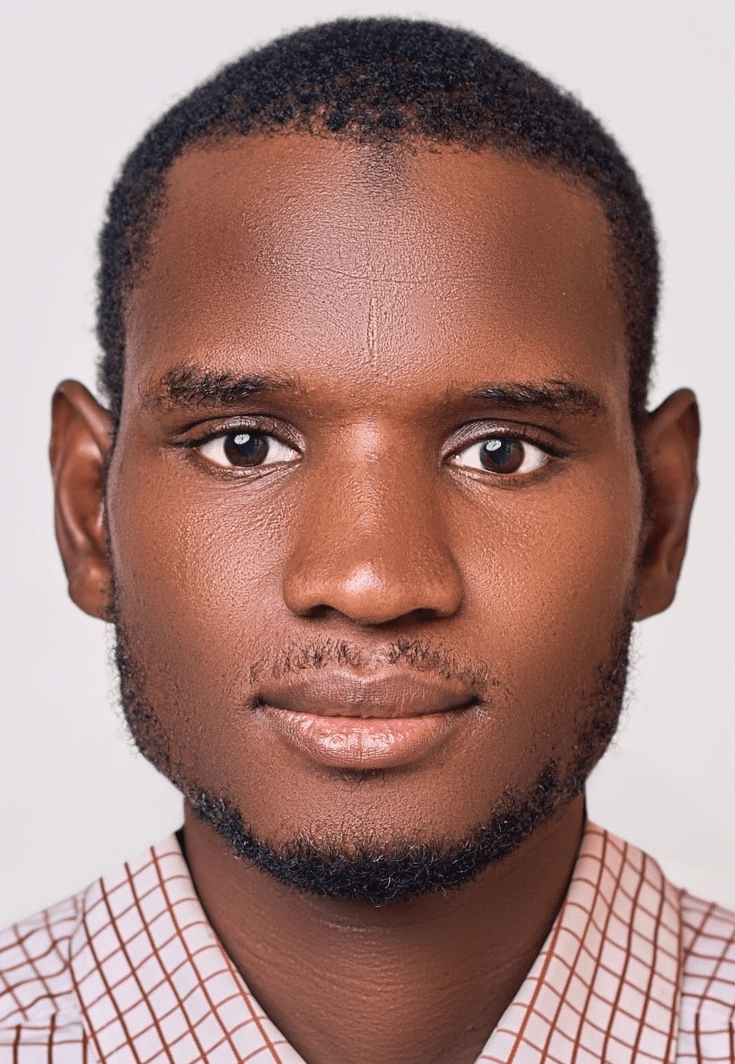
I am Alhassan Aliyu Saad, a doctoral researcher from Nigeria with an academic background in physics and medical radiation biophysics. I hold a BSc in Physics and an MSc in medical radiation biophysics, which provide a strong foundation for my research in medical physics and advanced nuclear imaging technologies. My academic training has progressively evolved toward nuclear and medical physics, with a focus on advanced nuclear imaging systems. My development as a researcher has been driven by a strong interest in translational science at the intersection of physics, nuclear imaging technology, and clinically relevant innovation.
I am currently a PhD researcher within the UPLIFT Doctoral Network, with my doctoral research hosted at Jagiellonian University in Kraków, Poland, where I work under the supervision and mentorship of Professor Ewa Stępień and Professor Paweł Moskal. My PhD project: “Upright PET Imaging” for upright radiotherapy, which focuses on the conceptual design, simulation, real-time monitoring, and verification of proton beam range during proton therapy, as well as the optimization of upright PET detector configurations to support novel upright radiotherapy workflows. I chose to focus on upright PET imaging because achieving high diagnostic accuracy in nuclear medicine is my long-term career objective. Upright PET represents a forward-looking direction to improve patient comfort, preserve physiologically realistic imaging conditions, and enhance diagnostic precision compared to conventional supine systems.
Through this project, I aim to gain in-depth expertise in PET detector technology and system design, particularly through close collaboration with the J-PET research group. I expect to strengthen my skills in experimental design, data analysis, and simulation based on Monte Carlo models using the GEANT4 Application for Tomographic Emission (GATE) simulations. My motivation for working on upright PET imaging stems from a sustained interest in nuclear medicine and a strong commitment to advancing patient-centered imaging with clear relevance in clinical settings. Outside of research, I play and watch football and enjoying continuous learning, coding, and sharing research-related content on social media.